Introduction
Education is often associated with textbooks, examinations, grades, and academic achievements. While these elements are undoubtedly important, true education extends far beyond classroom learning. The ultimate goal of education is to prepare students not only for college and careers but also for life itself.
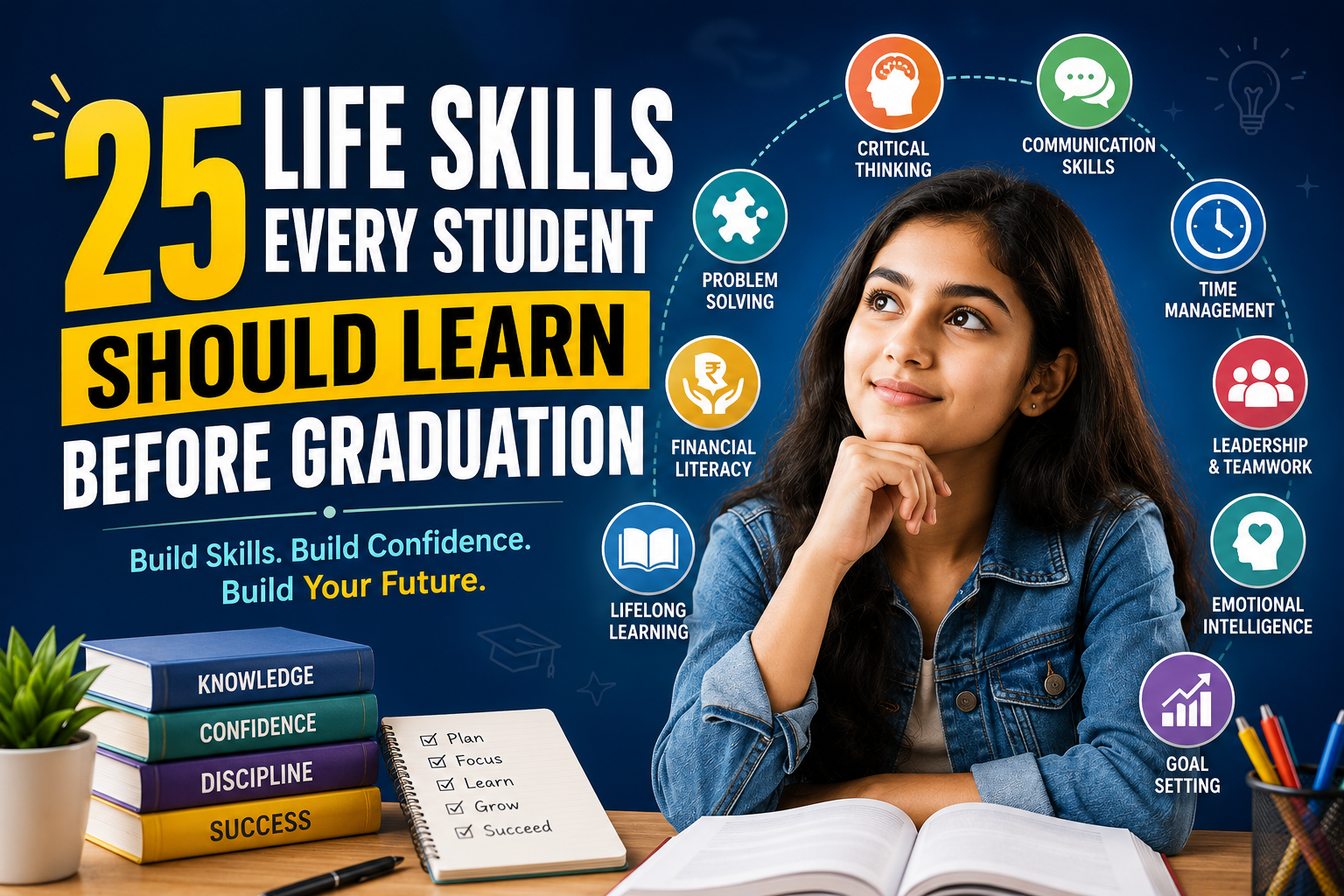
In today’s rapidly changing world, students need much more than subject knowledge to succeed. Employers, universities, and society increasingly value qualities such as communication, problem-solving, adaptability, emotional intelligence, and leadership. These abilities, commonly known as life skills, empower individuals to navigate challenges, make informed decisions, build meaningful relationships, and achieve personal and professional success.
At St Xavier’s School Pratapgarh, education is designed to nurture well-rounded individuals who are academically strong, socially responsible, emotionally resilient, and prepared for the opportunities and challenges of the future. Life skills education plays a vital role in shaping confident and capable students who can contribute positively to society.
This article explores 25 Life Skills Every Student Should Learn Before Graduation, explaining why each skill matters and how it can benefit students throughout their lives.
Why Life Skills Are Important for Students
Life skills are practical abilities that help individuals effectively manage everyday situations and responsibilities.
These skills help students:
- Build confidence
- Improve decision-making
- Enhance communication
- Develop leadership qualities
- Manage stress effectively
- Adapt to changing environments
- Strengthen relationships
- Prepare for future careers
While academic knowledge provides the foundation, life skills help students apply that knowledge successfully in real-world situations.
The most successful people often combine strong academic abilities with excellent life skills.
1. Effective Communication Skills
Communication is one of the most important skills students can develop.
Whether speaking in class, participating in interviews, presenting projects, or working in teams, effective communication influences success.
Good communication involves:
- Clear speaking
- Active listening
- Appropriate body language
- Respectful interaction
- Written communication
Students who communicate confidently often perform better academically and professionally.
2. Critical Thinking
Critical thinking allows students to evaluate information objectively and make informed decisions.
In an age of abundant information, students must learn how to:
- Analyze facts
- Evaluate sources
- Identify bias
- Solve complex problems
- Draw logical conclusions
Critical thinking helps students become independent learners and responsible citizens.
3. Problem-Solving Skills
Life constantly presents challenges.
Students who develop strong problem-solving abilities can:
- Identify issues
- Explore solutions
- Evaluate options
- Make effective decisions
Rather than avoiding difficulties, successful individuals learn how to overcome them creatively and confidently.
4. Time Management
Many students struggle to balance:
- Schoolwork
- Extracurricular activities
- Family responsibilities
- Social commitments
Time management helps students prioritize tasks and use their time efficiently.
Benefits include:
- Reduced stress
- Better academic performance
- Increased productivity
- Improved work-life balance
Students who manage time effectively develop habits that benefit them throughout life.
5. Financial Literacy
Understanding money management is an essential life skill.
Many young adults enter adulthood without basic financial knowledge.
Students should learn:
- Budgeting
- Saving
- Responsible spending
- Banking basics
- Financial planning
Financial literacy helps students make informed decisions and achieve long-term financial stability.
6. Emotional Intelligence
Emotional intelligence refers to understanding and managing emotions effectively.
Students with strong emotional intelligence can:
- Recognize emotions
- Control reactions
- Show empathy
- Build healthy relationships
- Resolve conflicts peacefully
This skill contributes significantly to personal happiness and professional success.
7. Adaptability and Flexibility
The modern world changes rapidly.
New technologies, careers, and challenges emerge constantly.
Adaptability helps students:
- Embrace change
- Learn new skills
- Handle uncertainty
- Remain resilient during transitions
Students who adapt easily are better prepared for future opportunities.
8. Goal Setting
Successful people rarely achieve their dreams by accident.
Goal setting provides direction and motivation.
Students should learn how to:
- Set realistic goals
- Break goals into smaller steps
- Track progress
- Stay motivated
Goal-oriented individuals are often more focused and productive.
9. Leadership Skills
Leadership is not limited to formal positions.
Students can demonstrate leadership by:
- Taking initiative
- Helping others
- Making responsible decisions
- Inspiring teamwork
Leadership skills prepare students to become positive contributors in school, college, workplaces, and communities.
10. Teamwork and Collaboration
Modern workplaces value teamwork more than ever before.
Students should learn how to:
- Cooperate with others
- Share responsibilities
- Respect diverse perspectives
- Resolve disagreements constructively
Strong teamwork skills enhance both academic and professional success.
11. Decision-Making Skills
Every day, individuals make numerous decisions.
Students must learn how to:
- Gather information
- Consider consequences
- Evaluate alternatives
- Make informed choices
Good decision-making reduces risks and improves outcomes.
12. Digital Literacy
Technology plays a central role in modern life.
Students should understand how to:
- Use digital tools effectively
- Evaluate online information
- Protect privacy
- Practice responsible online behavior
Digital literacy has become as essential as traditional literacy.
13. Public Speaking
Many people fear speaking in front of groups.
However, public speaking is a valuable skill for:
- Classroom presentations
- College admissions interviews
- Professional careers
- Leadership opportunities
Students who practice public speaking often gain confidence and communication skills.
14. Conflict Resolution
Disagreements are a natural part of life.
Students should learn how to:
- Listen respectfully
- Understand different viewpoints
- Manage emotions
- Find mutually beneficial solutions
Conflict resolution promotes healthy relationships and peaceful environments.
15. Self-Discipline
Success often depends on consistent effort rather than talent alone.
Self-discipline helps students:
- Stay focused
- Avoid procrastination
- Complete responsibilities
- Achieve long-term goals
Developing discipline early creates a strong foundation for future success.
16. Stress Management
Academic pressure, examinations, and personal challenges can create stress.
Students should learn healthy coping strategies such as:
- Exercise
- Deep breathing
- Time management
- Positive thinking
- Seeking support when needed
Managing stress effectively improves overall well-being and academic performance.
17. Creativity and Innovation
Creativity is valuable in every field, not just the arts.
Students who think creatively can:
- Generate new ideas
- Solve problems innovatively
- Adapt to changing situations
Innovation often begins with creative thinking.
18. Research Skills
Finding reliable information is an essential skill.
Students should learn how to:
- Conduct research
- Evaluate sources
- Verify facts
- Organize information
Strong research abilities support academic achievement and lifelong learning.
19. Responsibility and Accountability
Responsible individuals take ownership of their actions.
Students should learn to:
- Fulfill commitments
- Accept consequences
- Learn from mistakes
- Demonstrate integrity
Accountability builds trust and character.
20. Networking and Relationship Building
Personal and professional success often depends on strong relationships.
Students should develop skills in:
- Building connections
- Maintaining relationships
- Showing respect
- Collaborating effectively
Healthy relationships contribute to personal growth and future opportunities.
21. Resilience
Life includes setbacks and disappointments.
Resilience helps students:
- Recover from failures
- Learn from challenges
- Maintain optimism
- Continue pursuing goals
Resilient individuals are better equipped to handle life’s uncertainties.
22. Self-Awareness
Understanding oneself is crucial for personal development.
Students should recognize:
- Strengths
- Weaknesses
- Interests
- Values
Self-awareness helps individuals make informed choices about education, careers, and life goals.
23. Healthy Living Habits
Physical health directly affects learning and productivity.
Students should understand the importance of:
- Balanced nutrition
- Regular exercise
- Adequate sleep
- Healthy routines
Good health supports academic and personal success.
24. Cultural Awareness and Respect
Today’s world is increasingly interconnected.
Students should appreciate:
- Diverse cultures
- Different perspectives
- Global citizenship
Cultural awareness promotes understanding, tolerance, and respect.
25. Lifelong Learning
Perhaps the most important life skill is the ability to continue learning throughout life.
Technology, careers, and society evolve constantly.
Students who embrace lifelong learning remain adaptable and competitive in a changing world.
The willingness to learn is a skill that never loses value.
How Schools Can Effectively Teach Life Skills
While life skills can be learned through personal experiences, schools play a crucial role in helping students develop these abilities in a structured and supportive environment.
Modern education is no longer limited to academic instruction. Educational institutions are increasingly focusing on preparing students for real-world success by integrating life skills into daily learning experiences.
Classroom Activities
Teachers can encourage life skill development through:
- Group discussions
- Project-based learning
- Debates
- Presentations
- Collaborative assignments
These activities help students practice communication, teamwork, leadership, and critical thinking.
Sports and Physical Activities
Sports provide valuable lessons in:
- Discipline
- Teamwork
- Perseverance
- Leadership
- Emotional control
Students learn how to handle both success and failure gracefully, an essential life skill for adulthood.
Extracurricular Programs
Clubs, competitions, cultural events, and community service programs offer opportunities for students to:
- Explore interests
- Build confidence
- Develop organizational skills
- Strengthen interpersonal relationships
These experiences often teach lessons that cannot be fully learned through textbooks alone.
Technology Integration
In today’s digital world, schools can also help students develop:
- Digital literacy
- Online safety awareness
- Responsible technology use
- Research skills
By integrating technology responsibly, students become prepared for future academic and professional environments.
The Role of Parents in Life Skills Development
Parents are a child’s first teachers.
Many life skills begin developing at home long before students enter the classroom.
When schools and parents work together, students benefit from consistent guidance and support.
Encourage Independence
Parents can help children become more independent by:
- Allowing them to make age-appropriate decisions
- Encouraging responsibility for daily tasks
- Teaching accountability
Small responsibilities often build confidence and maturity.
Teach Financial Responsibility
Simple lessons such as:
- Saving pocket money
- Budgeting expenses
- Understanding needs versus wants
can create strong financial habits early in life.
Promote Problem-Solving
Instead of immediately solving every challenge, parents can encourage children to think through solutions independently.
This develops confidence and critical thinking skills.
Model Positive Behavior
Children often learn more from observing adults than from direct instruction.
Parents who demonstrate:
- Respect
- Honesty
- Responsibility
- Emotional control
provide powerful examples for their children.
How St Xavier’s School Pratapgarh Nurtures Life Skills
At St Xavier’s School Pratapgarh, education is viewed as a journey of holistic development rather than simply academic achievement.
The school strives to create an environment where students grow intellectually, emotionally, socially, morally, and physically.
Academic Excellence with Character Development
Strong academics remain important, but equal emphasis is placed on:
- Discipline
- Responsibility
- Integrity
- Leadership
- Respect for others
These values help shape students into responsible citizens.
Leadership Opportunities
Students are encouraged to take initiative through:
- School events
- Student leadership roles
- Group activities
- Community participation
These experiences help build confidence and leadership abilities.
Focus on Communication Skills
Through presentations, classroom discussions, debates, and co-curricular activities, students develop the communication skills necessary for future success.
Encouraging Creativity and Innovation
Modern education requires students to think creatively and adapt to new challenges.
The school supports innovation by encouraging:
- Creative projects
- Problem-solving activities
- Technology-enhanced learning
- Independent thinking
Building Future-Ready Students
The goal is not simply to prepare students for examinations but to prepare them for life.
By combining academic learning with life skill development, St Xavier’s School Pratapgarh helps students become confident, capable, and future-ready individuals.
Real-World Benefits of Life Skills Education
Many students wonder whether life skills truly matter after graduation.
The answer is simple: life skills influence nearly every aspect of adult life.
In Higher Education
Students with strong life skills often:
- Adapt more easily to college environments
- Manage academic workloads effectively
- Build positive relationships
- Handle independence successfully
In Professional Careers
Employers consistently value candidates who demonstrate:
- Communication abilities
- Teamwork
- Problem-solving
- Leadership
- Adaptability
In many cases, these qualities are just as important as technical knowledge.
In Personal Life
Life skills help individuals:
- Build healthy relationships
- Make sound decisions
- Manage finances
- Handle stress
- Achieve personal goals
These benefits continue throughout adulthood.
In Society
Responsible, skilled individuals contribute positively to their communities.
They become:
- Ethical citizens
- Effective leaders
- Community contributors
- Role models for future generations
Life skills create benefits that extend far beyond individual success.
Preparing Students for a Changing Future
The future workplace is evolving rapidly.
Many careers that today’s students will pursue may not even exist yet.
According to global workforce studies, future success will depend heavily on skills such as:
- Adaptability
- Creativity
- Emotional intelligence
- Collaboration
- Lifelong learning
While technology continues to advance, human-centered skills remain essential.
Students who combine academic knowledge with strong life skills will be better prepared to thrive in a constantly changing world.
Education must therefore focus not only on what students know but also on how they apply that knowledge.
Frequently Asked Questions (FAQs)
1. What are life skills for students?
Life skills are practical abilities that help students effectively manage daily challenges, make informed decisions, communicate well, and succeed academically and personally.
2. Why are life skills important before graduation?
Life skills prepare students for higher education, careers, relationships, financial responsibilities, and independent living.
3. Can life skills improve academic performance?
Yes. Skills such as time management, communication, self-discipline, and problem-solving often lead to better academic outcomes.
4. Which life skill is most important for students?
All life skills are valuable, but communication, critical thinking, adaptability, and emotional intelligence are among the most important for long-term success.
5. How can students develop life skills?
Students can develop life skills through classroom activities, sports, extracurricular programs, volunteering, leadership opportunities, and everyday experiences.
6. Do employers value life skills?
Absolutely. Employers consistently seek candidates who demonstrate communication, teamwork, leadership, adaptability, and problem-solving abilities.
7. How do life skills help in future careers?
Life skills enable individuals to collaborate effectively, solve workplace challenges, manage responsibilities, and adapt to changing professional environments.
8. What role do schools play in life skills development?
Schools provide structured opportunities for students to practice communication, leadership, teamwork, responsibility, and critical thinking in real-life situations.
Conclusion
Academic achievement is an important part of education, but it is only one piece of the larger picture.
The true purpose of education is to prepare students for successful, meaningful, and fulfilling lives. The 25 Life Skills Every Student Should Learn Before Graduation provide the foundation for that success.
Skills such as communication, leadership, emotional intelligence, financial literacy, adaptability, and critical thinking empower students to navigate challenges, seize opportunities, and contribute positively to society.
At St Xavier’s School Pratapgarh, the commitment to holistic education ensures that students receive more than academic instruction. They are encouraged to develop the character, confidence, responsibility, and life skills needed to excel in higher education, future careers, and life beyond the classroom.
As students prepare for graduation, these life skills become invaluable tools that support lifelong growth, resilience, and achievement.
Grades may open doors, but life skills help students walk confidently through them.