Introduction
Education has undergone remarkable changes over the past few decades. From traditional chalkboards and textbooks to smart classrooms and online learning platforms, technology has transformed the way students learn, communicate, and access information. Today, we stand at the beginning of a new era where digital innovation is reshaping education at an unprecedented pace.
The future of learning is no longer confined to classroom walls. Students can access educational resources from anywhere, collaborate with peers across the globe, and use advanced technologies to deepen their understanding of complex concepts. Artificial Intelligence (AI), Virtual Reality (VR), online learning platforms, digital collaboration tools, and personalized learning systems are creating exciting opportunities for both students and educators.
As the world becomes increasingly connected and technology-driven, schools must prepare students not only with academic knowledge but also with the skills needed to thrive in a rapidly evolving digital landscape.
At St Xavier’s School Pratapgarh, education is designed to equip students with the knowledge, skills, values, and adaptability required for success in the twenty-first century. By embracing innovation while maintaining strong educational foundations, the school helps students become confident, responsible, and future-ready learners.
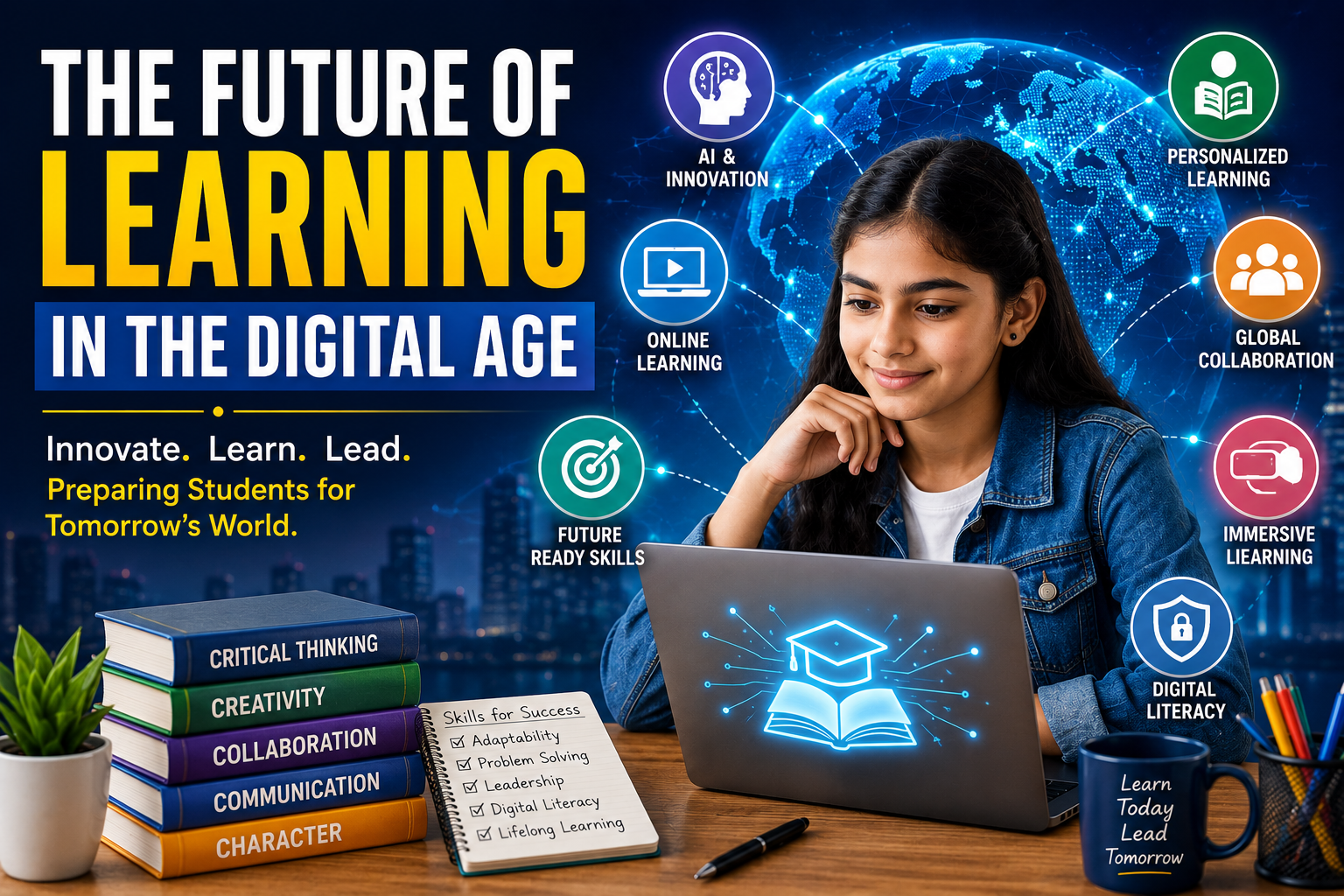
This article explores The Future of Learning in the Digital Age, examining how technology is transforming education and what students need to succeed in the years ahead.
Understanding the Digital Transformation of Education
The digital revolution has changed nearly every aspect of modern life, including education.
In the past, learning primarily depended on:
- Textbooks
- Classroom lectures
- Libraries
- Printed assignments
Today, students have access to:
- Digital textbooks
- Interactive learning platforms
- Educational videos
- Online research databases
- Virtual classrooms
- AI-powered learning tools
Technology has expanded learning opportunities and made education more accessible than ever before.
The goal is no longer simply acquiring information but learning how to use information effectively.
Why Digital Learning Matters
Digital learning offers significant advantages for students.
Greater Accessibility
Students can access educational materials anytime and anywhere.
Whether at school, home, or while traveling, learning opportunities remain available.
Personalized Learning
Technology allows students to learn at their own pace.
Advanced learning platforms can adapt content according to individual strengths and weaknesses.
Improved Engagement
Interactive content often makes learning more enjoyable.
Videos, simulations, quizzes, and educational games help maintain student interest and motivation.
Global Learning Opportunities
Students can connect with experts, educators, and peers from different countries, gaining valuable global perspectives.
The Rise of Personalized Learning
One of the most significant developments in modern education is personalized learning.
Every student learns differently.
Some students learn best through visual content, while others prefer reading, listening, or hands-on experiences.
Digital tools can customize learning experiences by:
- Adjusting difficulty levels
- Providing targeted practice
- Offering personalized feedback
- Identifying learning gaps
Personalized learning ensures that students receive the support they need to succeed.
Instead of following a one-size-fits-all approach, education becomes tailored to individual needs.
Artificial Intelligence and Education
Artificial Intelligence is rapidly becoming a valuable educational tool.
AI-powered platforms can help students:
- Understand difficult concepts
- Generate practice questions
- Receive instant feedback
- Improve writing skills
- Organize study schedules
Benefits of AI in Learning
AI can support:
- Personalized instruction
- Academic planning
- Learning analytics
- Skill development
However, students must learn to use AI responsibly.
Technology should enhance learning, not replace critical thinking or independent effort.
At St Xavier’s School Pratapgarh, students are encouraged to embrace technology while maintaining strong analytical and problem-solving abilities.
Virtual Reality and Immersive Learning
Imagine learning history by virtually walking through ancient civilizations or exploring the solar system as if traveling through space.
Virtual Reality (VR) is making these experiences possible.
How VR Enhances Learning
Students can:
- Experience historical events
- Explore scientific concepts
- Conduct virtual experiments
- Visit global landmarks
Immersive learning often improves understanding and retention because students actively engage with content.
The future classroom may increasingly incorporate virtual experiences to make learning more meaningful and memorable.
The Growing Importance of Digital Literacy
Digital literacy has become an essential life skill.
Students must learn more than how to use devices.
They need to understand how to:
- Evaluate online information
- Identify misinformation
- Protect personal data
- Use technology responsibly
- Communicate effectively online
Digital literacy helps students become informed and responsible digital citizens.
As technology continues to evolve, these skills will become increasingly valuable.
Collaborative Learning in a Connected World
Technology enables collaboration beyond geographical boundaries.
Students can now work together through:
- Online discussion platforms
- Video conferencing
- Shared documents
- Virtual group projects
Collaboration develops important skills such as:
- Communication
- Teamwork
- Leadership
- Cultural awareness
Future workplaces increasingly depend on collaborative environments, making these experiences particularly valuable.
The Role of Teachers in the Digital Age
Technology is transforming education, but it cannot replace teachers.
Educators continue to play a vital role in:
- Guiding learning
- Providing mentorship
- Encouraging critical thinking
- Supporting emotional development
- Inspiring curiosity
Technology serves as a tool, while teachers remain the heart of the learning process.
The most effective educational environments combine innovative technology with skilled, caring educators.
Developing Future-Ready Skills
The future workplace will demand skills that go beyond academic knowledge.
Students must develop:
Critical Thinking
The ability to analyze information and solve problems independently.
Creativity
Generating innovative ideas and approaches.
Communication
Expressing thoughts clearly and effectively.
Adaptability
Responding positively to change.
Emotional Intelligence
Understanding and managing emotions while building positive relationships.
Leadership
Taking initiative and inspiring others.
These skills will remain valuable regardless of technological advancements.
Online Learning and Hybrid Education
The digital age has expanded learning beyond traditional classrooms.
Many educational institutions now use:
- Online courses
- Hybrid learning models
- Digital assignments
- Virtual tutoring
Benefits of Hybrid Learning
Students enjoy:
- Greater flexibility
- Enhanced accessibility
- Individualized instruction
- Diverse learning resources
The future of education will likely involve a combination of in-person and digital learning experiences.
This blended approach offers the advantages of both traditional and modern education.
The Importance of Lifelong Learning
Technology evolves rapidly.
Many future careers may require skills that do not yet exist today.
As a result, students must embrace lifelong learning.
Lifelong learners:
- Stay curious
- Adapt to change
- Seek new knowledge
- Continuously improve skills
The ability to learn continuously may become one of the most important skills for future success.
Challenges of Digital Learning
While technology offers many benefits, it also presents challenges.
Screen Time Management
Excessive screen use can affect health and concentration.
Students must learn healthy technology habits.
Information Overload
The internet contains vast amounts of information.
Students need strong research and evaluation skills.
Cybersecurity Risks
Online safety remains essential.
Students should understand how to protect personal information and use digital platforms responsibly.
Maintaining Human Connections
Technology should complement, not replace, meaningful human interactions.
Strong relationships remain an important part of education and personal development.
How St Xavier’s School Pratapgarh Prepares Students for the Future
At St Xavier’s School Pratapgarh, preparing students for the future involves more than academic instruction.
The school focuses on developing:
- Digital literacy
- Critical thinking
- Leadership skills
- Communication abilities
- Character development
- Academic excellence
Students are encouraged to become confident learners who can adapt to changing technologies while maintaining strong values and ethical principles.
By combining modern educational practices with holistic development, the school helps students become future-ready citizens capable of succeeding in a rapidly evolving world.
Frequently Asked Questions (FAQs)
1. What is digital learning?
Digital learning involves using technology such as computers, tablets, online platforms, and educational software to support learning.
2. How is technology changing education?
Technology improves accessibility, personalization, collaboration, engagement, and learning opportunities for students worldwide.
3. Will technology replace teachers?
No. Technology supports education, but teachers remain essential for guidance, mentorship, and human connection.
4. What skills are important in the digital age?
Critical thinking, communication, adaptability, creativity, digital literacy, and emotional intelligence are among the most important future-ready skills.
5. How can students prepare for future careers?
Students should focus on continuous learning, technology awareness, problem-solving, communication, and adaptability.
6. Why is digital literacy important?
Digital literacy helps students use technology responsibly, evaluate information critically, and participate effectively in modern society.
7. What is personalized learning?
Personalized learning tailors educational experiences to individual student needs, abilities, and learning styles.
8. How does St Xavier’s School Pratapgarh support future-ready education?
The school combines academic excellence, digital learning, character development, leadership opportunities, and holistic education to prepare students for future success.
Conclusion
The future of learning in the digital age is filled with exciting possibilities. Technology is transforming education by making learning more accessible, personalized, interactive, and connected than ever before.
However, successful education remains about more than technology alone. Students must also develop critical thinking, creativity, communication, adaptability, and strong character.
At St Xavier’s School Pratapgarh, the focus is on preparing students not only for examinations but also for the opportunities and challenges of the future. By embracing innovation while maintaining strong educational values, the school helps students become confident, responsible, and lifelong learners.
As technology continues to evolve, one thing remains certain: students who combine knowledge, skills, character, and adaptability will be best prepared to thrive in the digital age and beyond.
For today’s students, the future is not something to fear—it is something to prepare for, embrace, and help shape.
