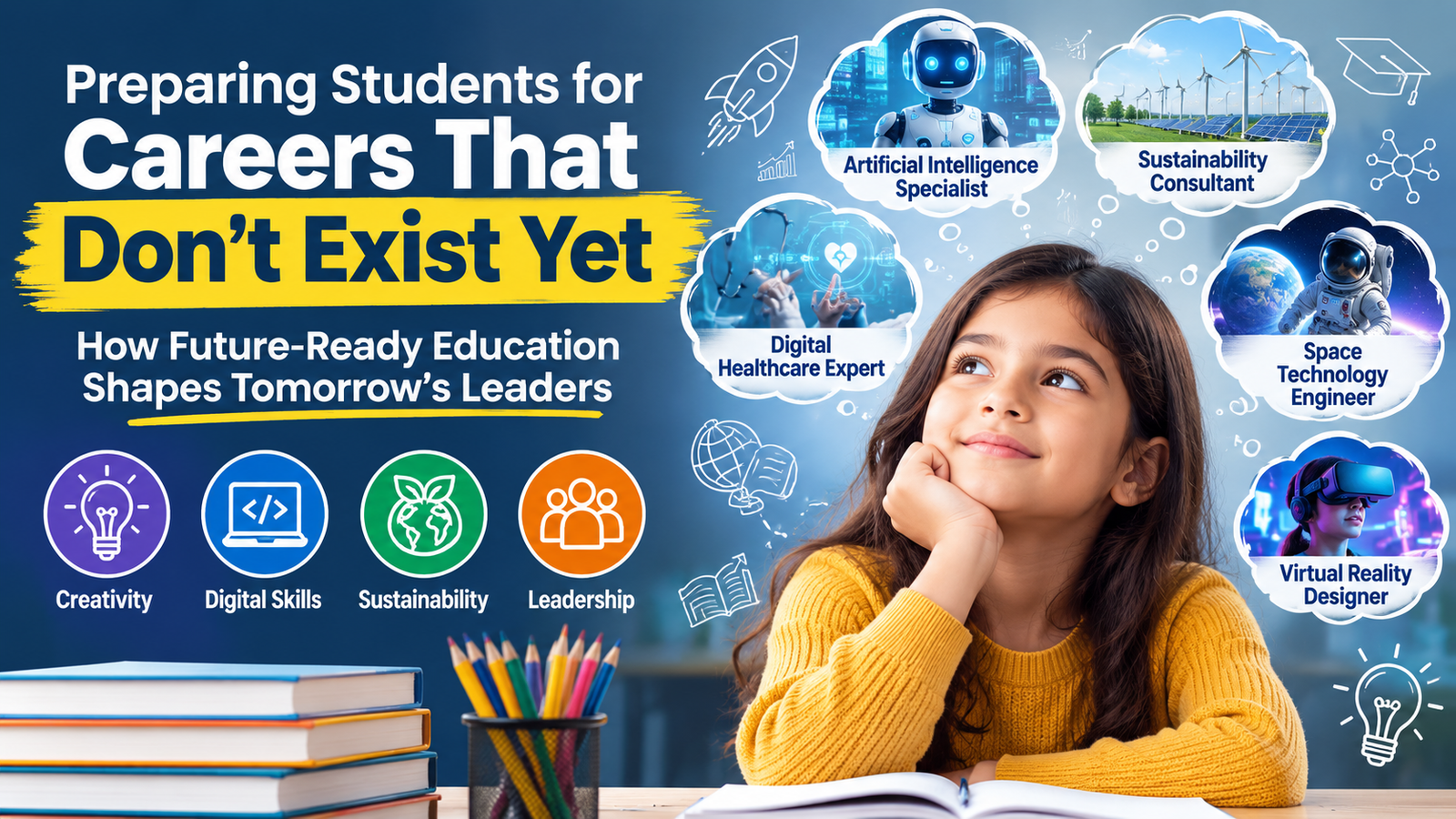
Imagine telling someone twenty years ago that careers like AI Prompt Engineer, Drone Pilot, Data Scientist, Cybersecurity Analyst, Sustainability Consultant, YouTube Content Strategist, or Virtual Reality Designer would become highly sought-after professions. Many of these jobs simply didn’t exist—or were in their infancy. Today, they are among the fastest-growing career paths.
The pace of technological advancement, globalization, and innovation is reshaping the world of work faster than ever before. According to global workforce trends, many children currently in primary school will eventually work in occupations that have not yet been invented. This reality presents both an exciting opportunity and an important challenge for parents, educators, and schools.
Traditional education often focused on preparing students for predictable career paths. However, the future demands something different. Success will depend less on memorizing information and more on developing adaptable skills such as creativity, critical thinking, emotional intelligence, digital literacy, collaboration, and lifelong learning.
At STXPBH School, we believe education should prepare students not only for today’s opportunities but also for tomorrow’s possibilities. By fostering curiosity, innovation, resilience, and practical problem-solving, we help students build a strong foundation for careers that may not even exist yet.
In this guide, we explore why future-ready education matters and how schools and parents can work together to prepare children for an ever-changing world.
Table of Contents
- Why the Future of Work Is Changing
- Careers That Didn’t Exist a Decade Ago
- Why Traditional Education Alone Is No Longer Enough
- The Skills Every Future Professional Needs
- Critical Thinking and Problem-Solving
- Creativity and Innovation
- Digital Literacy and AI Awareness
- Communication and Collaboration
- Emotional Intelligence
- Adaptability and Resilience
- Financial and Entrepreneurial Literacy
- The Importance of STEM Education
- Why Arts and Creativity Still Matter
- Lifelong Learning: The Ultimate Skill
- The Role of Parents in Future Career Readiness
- How Schools Can Prepare Future-Ready Students
- Emerging Career Fields Students Should Know About
- Building Confidence Through Experiential Learning
- Frequently Asked Questions
- Conclusion
Why the Future of Work Is Changing
The world is experiencing one of the fastest technological transformations in history. Artificial intelligence, automation, robotics, cloud computing, biotechnology, renewable energy, and digital communication are changing the way businesses operate.
Many repetitive tasks are now performed by machines, while entirely new industries are emerging.
Future employers will increasingly value people who can:
- Learn quickly
- Adapt to change
- Solve unfamiliar problems
- Work with technology
- Collaborate across cultures
- Think creatively
Education must evolve alongside these changes to ensure students remain prepared for future opportunities.
Careers That Didn’t Exist a Decade Ago
History shows how quickly the job market changes.
Today, many successful careers were virtually unknown just a few years ago, including:
- Artificial Intelligence Specialist
- Machine Learning Engineer
- Cybersecurity Analyst
- Drone Operator
- Digital Marketing Strategist
- Social Media Manager
- Cloud Computing Engineer
- Mobile App Developer
- Data Scientist
- UX/UI Designer
- Renewable Energy Consultant
- Robotics Technician
- E-commerce Specialist
- Sustainability Analyst
- Content Creator
This demonstrates that today’s students need flexible skills rather than training for a single lifelong profession.
Why Traditional Education Alone Is No Longer Enough
Academic excellence remains important, but knowledge alone is no longer sufficient.
Students need opportunities to:
- Think independently
- Ask meaningful questions
- Solve real-world problems
- Collaborate with others
- Apply classroom knowledge practically
- Communicate effectively
Future education combines strong academics with practical life skills that prepare students for changing career landscapes.
Critical Thinking: The Skill That Never Becomes Obsolete
Technology can provide information instantly.
However, humans still excel at evaluating information, making ethical decisions, and solving complex challenges.
Critical thinking helps students:
- Analyze situations
- Identify patterns
- Evaluate evidence
- Make informed decisions
- Develop innovative solutions
Schools should encourage inquiry-based learning where students investigate problems instead of simply memorizing answers.
Creativity and Innovation
Innovation begins with imagination.
Future careers will reward individuals who can create new ideas rather than simply follow instructions.
Creativity develops through:
- Art
- Music
- Drama
- Design projects
- Robotics competitions
- Science experiments
- Project-based learning
Children encouraged to explore ideas become confident innovators.
Digital Literacy and AI Awareness
Digital skills are becoming as essential as reading and mathematics.
Students should understand:
- Responsible internet use
- Online research
- Digital collaboration
- Cybersecurity basics
- Artificial intelligence
- Coding fundamentals
- Data privacy
Teaching technology responsibly ensures students use digital tools ethically and effectively.
Communication and Collaboration
Almost every modern career requires teamwork.
Students benefit from learning how to:
- Express ideas clearly
- Listen actively
- Work in diverse teams
- Resolve disagreements respectfully
- Present confidently
Group activities, debates, presentations, and collaborative projects help build these essential skills.
Emotional Intelligence: A Human Advantage
As automation handles routine tasks, human qualities become even more valuable.
Emotional intelligence includes:
- Self-awareness
- Empathy
- Emotional regulation
- Leadership
- Relationship-building
Students with strong emotional intelligence often become better leaders, collaborators, and decision-makers.
Adaptability and Resilience
The future workplace will change continuously.
Students may switch careers multiple times during their lifetime.
Adaptability enables children to:
- Accept change positively
- Learn new skills quickly
- Recover from setbacks
- Stay motivated during challenges
Schools should celebrate effort, experimentation, and continuous improvement.
Financial and Entrepreneurial Literacy
Future-ready education also includes practical life skills.
Students benefit from understanding:
- Budgeting
- Saving
- Investing basics
- Entrepreneurship
- Business planning
- Responsible financial decision-making
These skills prepare children for independence regardless of their chosen career.
The Importance of STEM Education
Science, Technology, Engineering, and Mathematics remain central to future innovation.
Hands-on STEM learning encourages students to:
- Experiment
- Design solutions
- Build prototypes
- Analyze data
- Think logically
Robotics clubs, coding workshops, and science fairs inspire curiosity while preparing students for emerging industries.
Why Arts and Creativity Still Matter
Future employers seek well-rounded individuals.
Arts education develops:
- Imagination
- Design thinking
- Communication
- Confidence
- Cultural understanding
Creativity complements scientific thinking, making students more adaptable in diverse careers.
Lifelong Learning: The Ultimate Future Skill
The most successful professionals continue learning throughout their lives.
Students should develop habits such as:
- Reading regularly
- Asking questions
- Exploring new technologies
- Taking online courses
- Participating in workshops
- Reflecting on experiences
Curiosity ensures continuous growth throughout changing careers.
The Role of Parents in Preparing Future-Ready Children
Parents play an essential role by encouraging:
- Independent thinking
- Reading beyond textbooks
- Healthy discussions
- Creative hobbies
- Practical problem-solving
- Positive attitudes toward learning
Parents who value curiosity help children become confident lifelong learners.
How Schools Prepare Students for the Future
At STXPBH School, education goes beyond examination success.
Our learning environment encourages students to:
- Develop academic excellence
- Strengthen communication skills
- Build leadership qualities
- Participate in sports and cultural activities
- Explore technology responsibly
- Engage in collaborative projects
- Think critically and creatively
By balancing knowledge with life skills, we prepare students to succeed in a rapidly changing world.
Emerging Career Fields Students Should Know About
Future opportunities may include careers in:
- Artificial Intelligence
- Robotics Engineering
- Renewable Energy
- Space Technology
- Biotechnology
- Climate Science
- Digital Healthcare
- Quantum Computing
- Cybersecurity
- Virtual Reality
- Augmented Reality
- Sustainable Architecture
- Smart Agriculture
- Educational Technology
While specific jobs will evolve, the skills required to succeed—adaptability, creativity, and continuous learning—will remain valuable.
Building Confidence Through Experiential Learning
Learning by doing helps students apply classroom knowledge to real-world situations.
Experiential learning includes:
- Science exhibitions
- Community service
- Field trips
- Innovation challenges
- Leadership programs
- Group projects
- Public speaking competitions
These experiences build confidence while preparing students for future careers.
Frequently Asked Questions
Why should schools prepare students for jobs that don’t exist yet?
Because technology and society are changing rapidly. Students need adaptable skills that remain valuable even as industries evolve.
What skills will future employers value most?
Critical thinking, creativity, digital literacy, communication, emotional intelligence, adaptability, collaboration, and lifelong learning.
How can parents support future-ready education?
Encourage curiosity, reading, problem-solving, responsible technology use, creativity, and open discussions about new ideas and innovations.
Is academic performance still important?
Yes. Strong academic foundations remain essential, but they should be complemented by practical life skills and character development.
How does STXPBH School prepare students for future careers?
Through a balanced approach that combines academic excellence, technology integration, extracurricular activities, leadership opportunities, creativity, and holistic student development.
Conclusion
The future belongs to learners who are adaptable, curious, and ready to embrace change. While no one can predict every profession that will exist twenty years from now, we can confidently prepare students with the knowledge, mindset, and skills needed to thrive in any environment.
Future-ready education is not about teaching children one specific career path. It is about empowering them to think independently, solve problems creatively, communicate effectively, use technology responsibly, and continue learning throughout life.
At STXPBH School, we are committed to nurturing confident, compassionate, and capable learners who are prepared not only for examinations but also for the opportunities and challenges of tomorrow. By combining academic excellence with innovation, creativity, and character development, we help every student build a strong foundation for a future full of possibilities.
The careers of tomorrow may not exist today—but with the right education, today’s students will be ready to create them.